CanIRON XIV
Photo from the first Scrap Smith event in 2024.
The sun set, and CanIRON XIV was over. Sleep-deprived and body aching, I joined Shaun and Jordan’s campfire at the end of pole barn 2. Gone were the sounds of anvils ringing and the hurried conversations between heats. After crushing a couple smokies and a few Big Roys, we made our way to the Blacksmith’s Shop to look through it’s relics.
This was, for me, the perfect way to end the event. A couple blacksmithing buddies, two of the many people that pushed hard to bring the event to reality, and a short adventure. We dug through every corner of the shop and imagined how it would have been to labor in a workroom like that, 100 or more years ago. Probably not very different than today. And this brought me back to a conversation that I had had with one of the volunteers of the Manitoba Agricultural Museum, Terry Radcliffe.
Terry didn’t know what to expect from CanIRON. He had volunteered to help out with the event and what came from the weekend was a change of perspective. Having spent most of his time doing functional blacksmithing, ie repairs and tool fabrication, this was the first time that he was exposed to blacksmithing as an art-form.
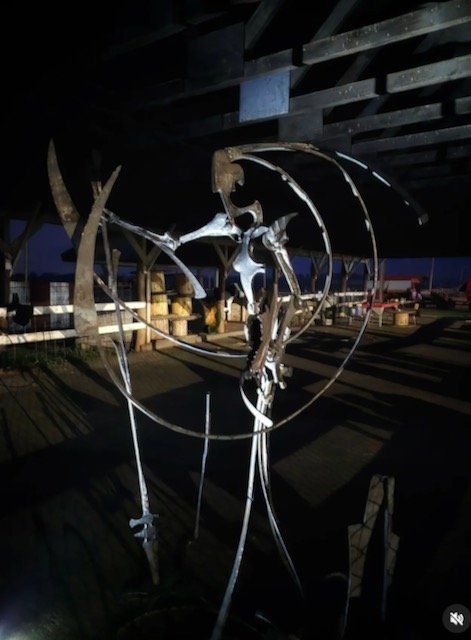
Witch of the Prairies_Jake James
Blacksmithing at the museum existed, in its first sense, for repairs, for recycling old materials into new functional items. The modern blacksmith may be able to do these types of things but has evolved into becoming an artist. They have amassed massive amounts of time at the anvil, hammer in hand, developing skills and tooling to be able to make things of beauty.
Take for example all of the demonstrators who shared their knowledge and skills at the event. From the minutia of shaping individual teeth for an anthropomorphic orchid sculpture by Leah Aripotch, to retaining structural steel elements and blending them into a delicately balanced artwork by Pat Quinn. Taking a blanc piece of stainless steel and making a precision tool for everyday use in your kitchen by Noah Vachon. To Frank Annighofer and Ryan Bélanger finding a perfect crossroads blending traditional blacksmithing and modern design elements. And finally Jake James, who absolutely threw himself into the fire by requesting the aid of smiths from across the country and from abroad to help complete an aggressively defiant 7-foot sculpture that took around 450 hours to finish.
Our shop exploration complete, we closed the doors of the Blacksmith’s shop and I headed towards camp, influenced by the daze of sleep deprivation, relief of stress planning and the intense heats of the Wednesday and Thursday setup days. I stopped and chatted with the last smiths that were resting before their journey’s home. I was welcomed with smiles, buzzing energy from newly formed friendships and inspirations. I took the opportunity to snap a few photos of hands after the heavy weekend of smithing, they were beat up! Blacksmithing isn’t for the meek. We sacrifice for our art, not just with the time spent but the spending of our bodies.
Piecing it all together for a year, and culminating into one giant weekend was a ton of work but all of the efforts that we put in ahead of time paid off. Sure there were 100 different problems to resolve but everyone was on the same page and we checked off the list until we could pick up our hammers and get in on the action. I was able to spend an hour working on Jake Jame’s sculpture: Wrath of the Prairie Queen. I wish I could have done more to help make it but I’m happy to have a bit of my efforts put into that piece. I find it unfortunately significant today.
The sculpture was transported to Derek Foster’s garage where we’ll decide how we want to present the piece. It will be installed near the entrance of the Manitoba Agricultural Museum with a plaque with all of our names on it. A reminder of this epic weekend, the work put forth to construct it and as a symbol of Canadian unity.
I’d like to offer a massive thank you to the Manitoba Blacksmith Guild executive, Derek Foster, Chris Spilak, Shaun Vanbeselaere, Sheldon Dubois, Jordan Mahara and Rachelle Lamoureux. The hours they dedicated to planning, collecting tools, organizing rides, communicating with demonstrations was impressive! To our volunteers who went above and beyond to make sure that things were being done safely and ran smoothly. Thank you Caroline, Terry and all the others!
-Justin Lamoureux
Originally published in The Bit #7